



















About this Stay
I stayed at Funaya Ryokan, the oldest and most prestigious ryokan in Dogo Onsen, Matsuyama, Ehime Prefecture. The ryokan is said to have been founded around 1627 (Kan’ei 4), which means it is approaching its 400th anniversary—an extraordinary history. It is also known as one of the most famous ryokan in Dogo Onsen, having hosted members of the Japanese Imperial Family over the generations.
Dogo Onsen is easily accessible, about 40 minutes by limousine bus from Matsuyama Airport, and Funaya Ryokan is conveniently located just a three-minute walk from JR Dogo Onsen Station.
On this visit, I first paid my respects at two nearby shrines—Nakajima Shrine and Isaniwa Shrine—before checking into the ryokan.
For dinner, I enjoyed a beautifully prepared meal featuring a wide variety of local Ehime ingredients, including mandarin oranges, silk-skin eggplant (kinukawa nasu), white taro, fresh seafood, and Japanese wagyu beef. The dishes were carefully crafted and truly delicious, offering a wonderful introduction to the region’s seasonal flavors.
Table of Contents
Nearby Shrines
Top
Nakajima Shrine
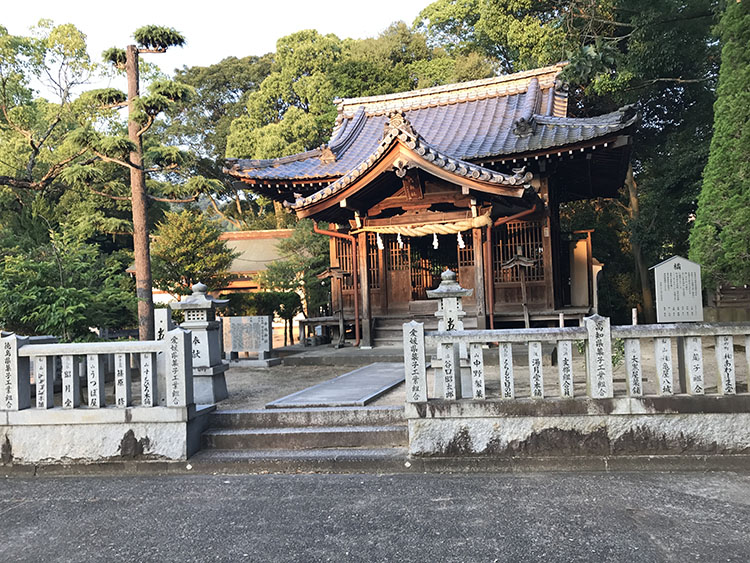
Nakajima Shrine is located at the top of the steps beside the Dogo Onsen ryokan Funaya. It is a branch shrine of Nakajima Shrine in Toyooka City, Hyogo Prefecture, which is known as the deity of sweets and confectionery. Stone monuments donated by confectionery associations and sweet makers from across Shikoku line the grounds.
Stairs to the Shrine
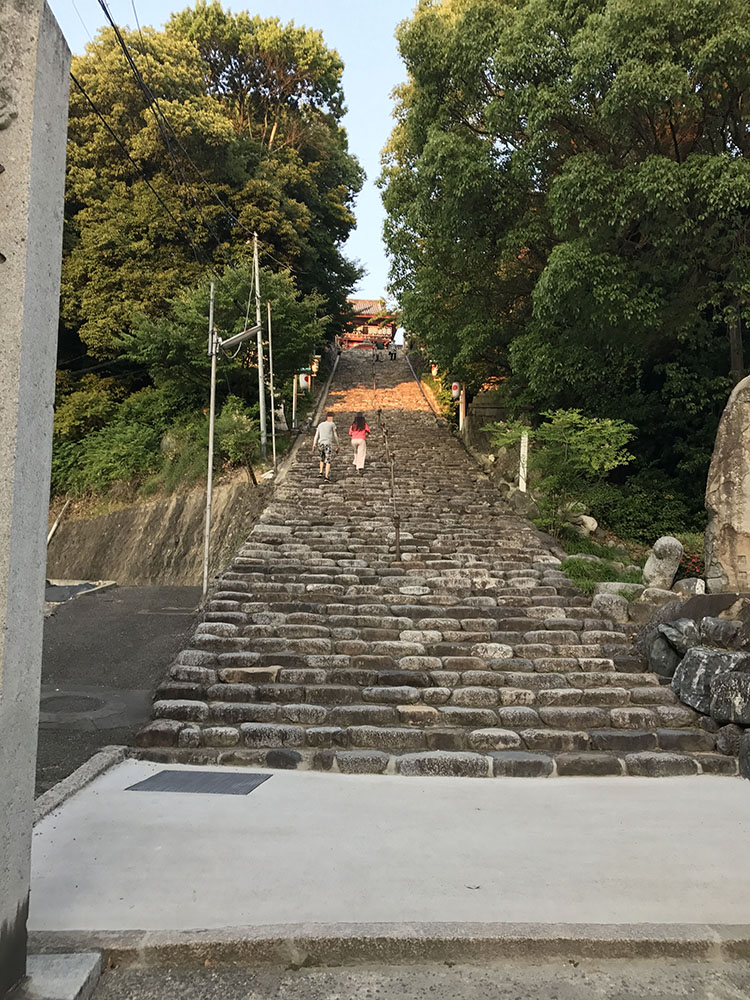
Next, I visited Isaniwa Shrine. The shrine is located at the top of a long staircase consisting of 135 steps.
Isaniwa Shrine
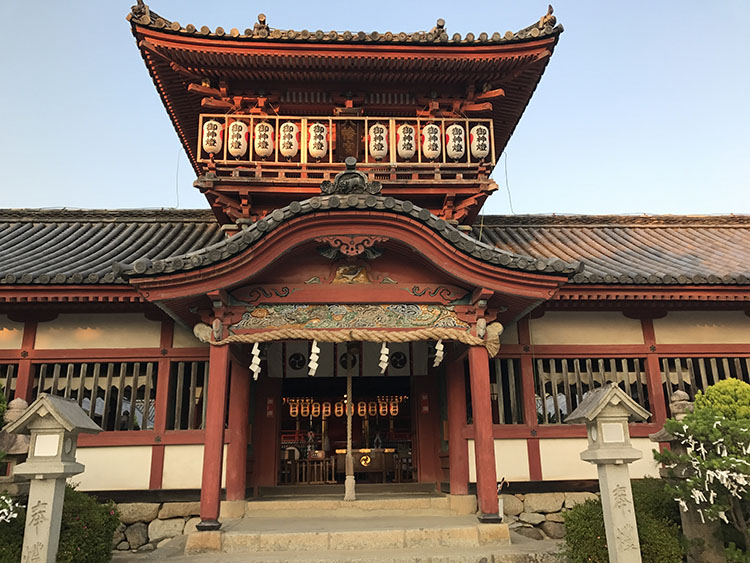
This is the Hachiman-zukuri style shrine building of Isaniwa Shrine, which has been designated as an Important Cultural Property of Japan.
This shrine is said to be one of the three major Hachiman-zukuri shrines in Japan. The other two are Usa Shrine (Oita Prefecture) and Iwashimizu Hachimangu Shrine (Kyoto Prefecture).
View from the Shrine
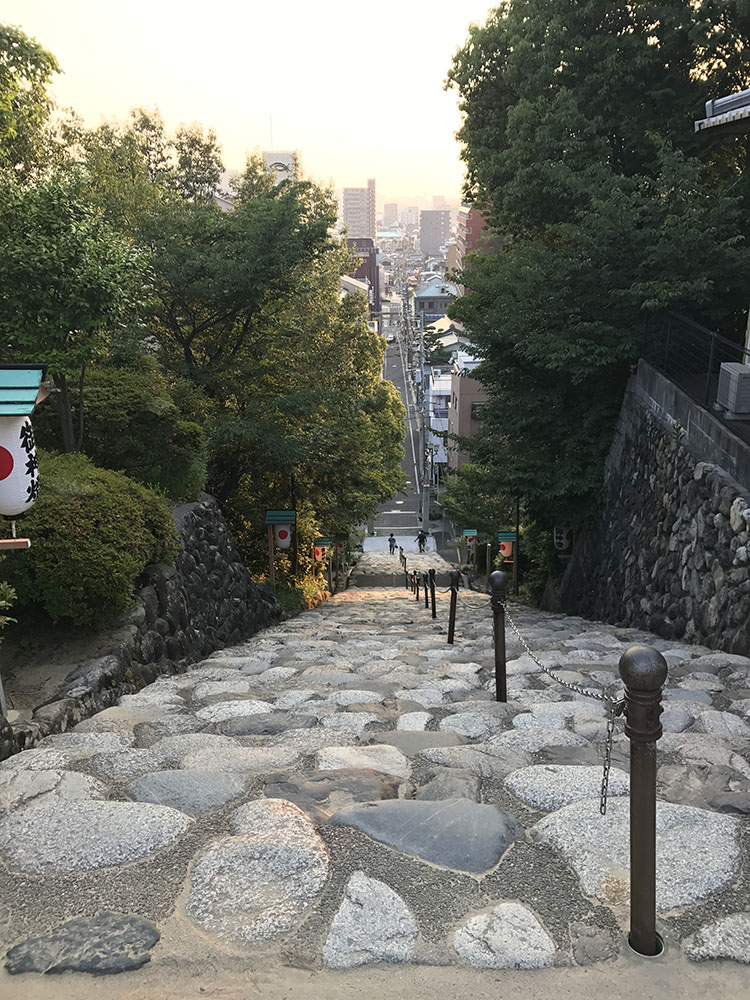
This is the view of the Dogo Onsen townscape as seen from the top of the 135-step staircase at Isaniwa Shrine.
Dinner
Top
The Beginning of Dinner
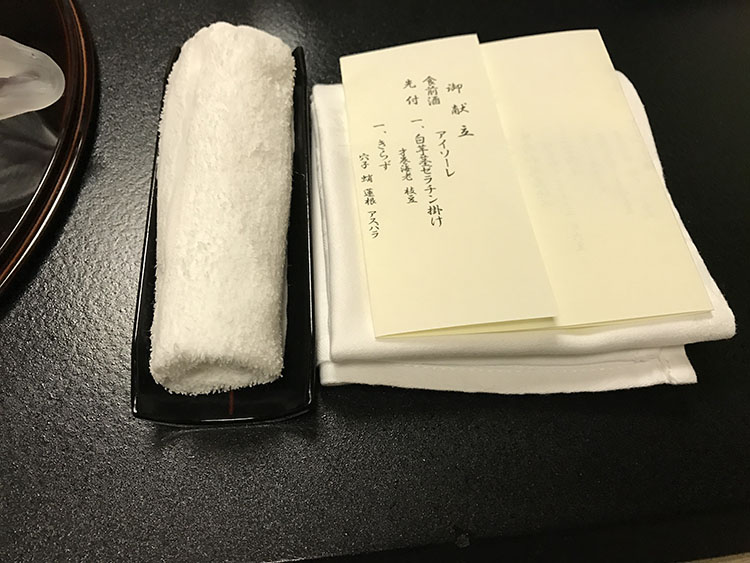
Dinner was served in the guest room. First, a hot towel (oshibori) and the evening menu were brought in, marking the start of the meal.
Appetizers
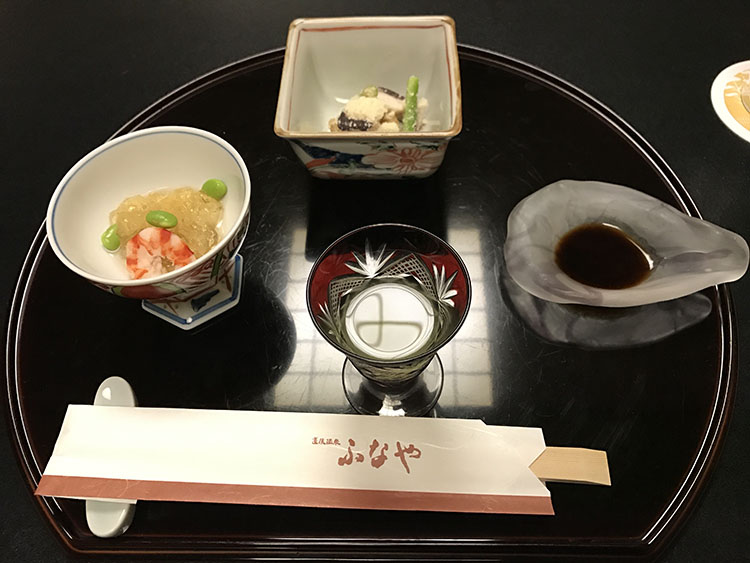
This is the appetizer course.
- • Aperitif: Mandarin orange liqueur “Aisole”
Developed through a collaboration between a sake brewery in Ehime Prefecture, Matsuyama University, and Matsuyama Design College. - • Ehime-grown “Shiro-imo” (white taro)
Served with a light gelatin sauce made from the stem, topped with edamame and shrimp. - • Okara salad
Mixed with conger eel, octopus, lotus root, and asparagus.
Menu
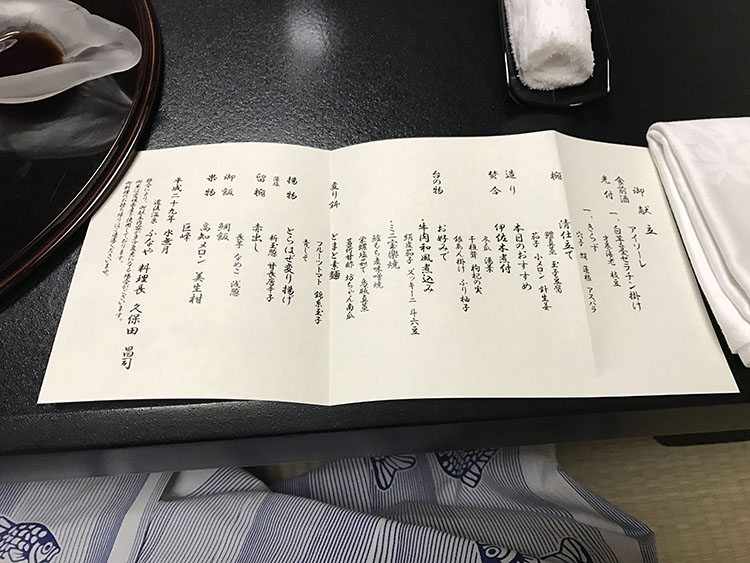
This is the printed menu for the evening. It features a well-balanced and elaborate traditional Japanese kaiseki dinner, showcasing a wide variety of seasonal dishes.
Sashimi and Clear Soup
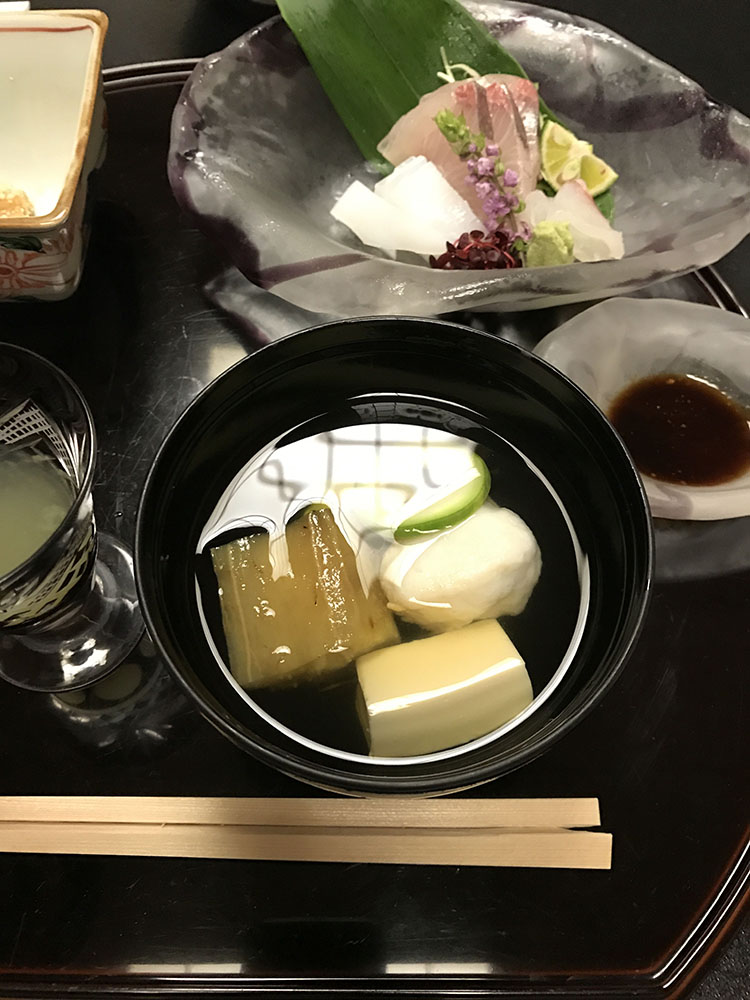
Sashimi and clear soup were served.
- • Sashimi:
- Likely yellowtail (hamachi) and squid.Both were extremely fresh and delicious.
- • Clear soup (osuimono):
- Containing pike conger (hamo), egg tofu, eggplant, baby melon, and myoga ginger.
Simmered Dish, Seasonal Specialty, and Grilled Dish
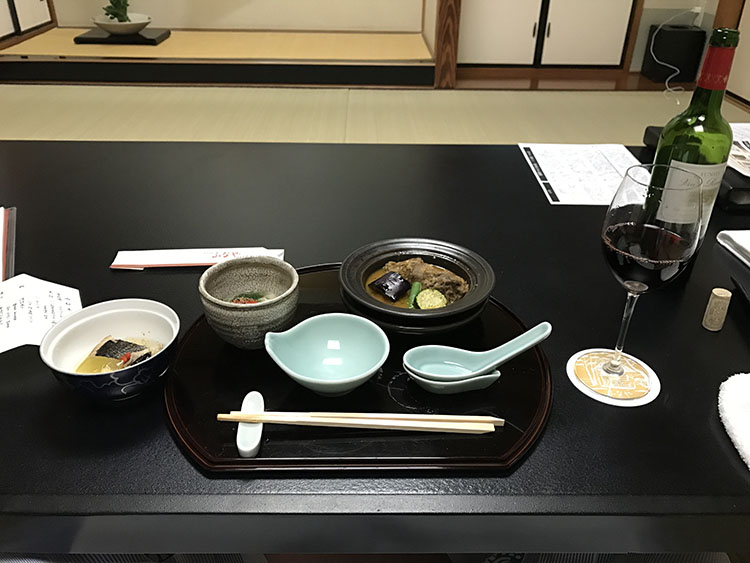
From left to right:
- • Simmered tilefish (isaki)
- • Tomato somen noodles
- • Japanese-style simmered beef
Seasonal Specialty and Meat Dish
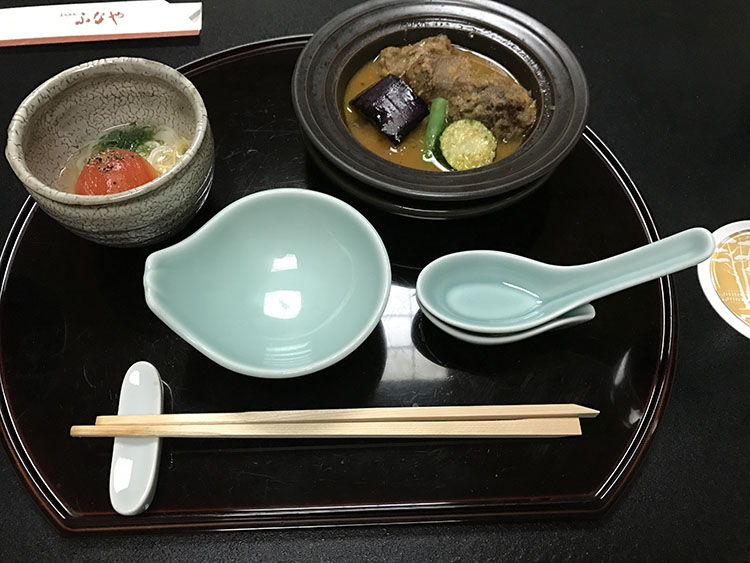
- • Japanese-style simmered beef
- Prepared with kinukawa nasu (a premium eggplant variety from Ehime) and zucchini.
- • Tomato somen noodles
- Made with Ehime-grown fruit tomatoes, shredded egg crepe, and green shiso leaves.